How to Set up Hypoallergenic Bedding for Your Allergies?
Allergies have a way of sneaking into everyday life. You notice them in small moments: a sneeze while making the bed, a scratchy throat after folding laundry, congestion that shows up long before you step outside. What’s easy to miss is that many of these reactions don’t start with the air outdoors. They start with the surfaces you touch, sit on, and rest against for hours at a time.
Your bed is one of the most intimate environments you have. It’s where your skin sheds, fabrics warm up, and moisture quietly builds. This is why hypoallergenic bedding has become such an important conversation for people with allergies. Not as a buzzword, and not as a luxury upgrade, but as a way to rethink what your bedding is holding onto and how it supports your health day after day. Understanding what makes bedding allergy-aware, and how to build the right setup, can change how your bedroom feels long before you lie down.
Table of Contents
What’s Really Behind Bedroom Allergies?

If allergies feel louder at night, it’s often because the bedroom is where allergens settle most comfortably. You spend hours in the same enclosed space, breathing close to the same surfaces, and your bed acts like a soft “collection zone” for particles that irritate sensitive airways. Allergy organizations consistently point to dust mites, pet dander, and mold as major indoor triggers.
Dust Mites
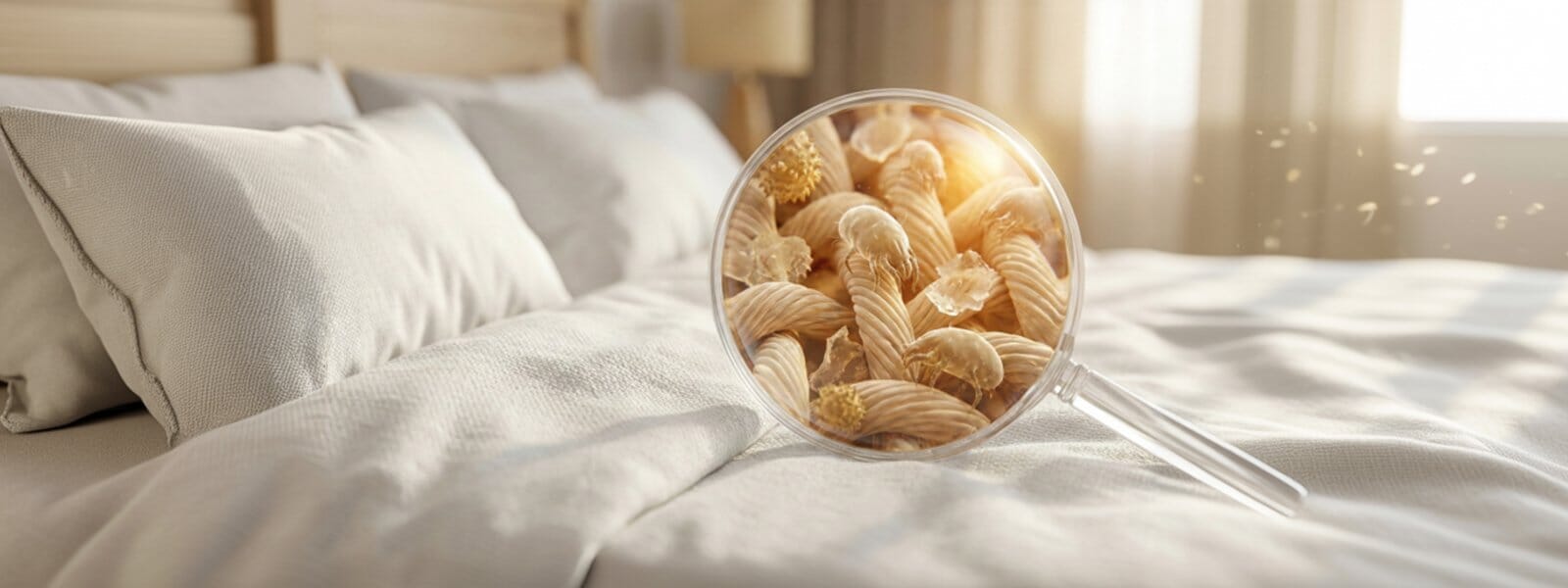
Dust mites are microscopic, eight-legged arachnids, more closely related to spiders and ticks than insects. Because they’re invisible to the naked eye, they’re easy to miss, unlike bed bugs. They thrive in warm, humid microclimates like mattresses, pillows, and bedding, feeding on shed skin and settling deep into fibers. According to Stanford Health Care, a single female dust mite can lay 25 to 50 eggs every three weeks which means populations can multiply fast enough that up to one million dust mites may live in a single bed.
Pet Dander
Pets can trigger allergies in more ways than people realize. It’s not just dander (tiny skin flakes), but also proteins in saliva and urine that can set off symptoms. Those particles mix with everyday household dust and settle into the places you cuddle up most like bedding, upholstered furniture, and rugs. Even if your pet isn’t in the bedroom right now, dander can still linger in soft fabrics and get stirred up when you move around. In homes with birds, feathers and droppings can also break down into dust and bother anyone who’s sensitive to them.
Mold
Mold is a type of fungus that releases tiny spores into the air. When there’s moisture, dampness, or poor airflow, mold is more likely to grow and those spores can build up in the room. For people with mold allergies, breathing them in can trigger symptoms fast. Some mold is visible, but plenty isn’t, and even when you can’t see it, mold particles and spores can still become part of household dust and irritate sensitive noses and lungs.
Pollen
Then there are the “guests you didn’t invite.” Pollen sneaks indoors on hair, skin, clothing, and even pets, then ends up in bedroom dust. Once it’s inside, it doesn’t just disappear. It can settle into sheets, blankets, and carpets, which is why allergies can flare even when you’re safely “indoors.”
Add in synthetic fibers (which can hold onto dust and irritants) and poor ventilation (which lets pollutants build up), and a bedroom can quietly become an allergy amplifier.
What Does Hypoallergenic Bedding Mean?
When it comes to bedding that is hypoallergenic, it means textiles and sleep layers that are designed to reduce exposure to common allergy triggers not to eliminate allergies entirely. The word “hypoallergenic” itself isn’t a regulated scientific standard; it’s a term used to signal materials and constructions that are less likely to harbor or attract allergens like dust mites, pet dander, pollen, and mold spores. In practice, this type of bedding draws on insights from immunology and indoor air quality research that show how certain fabrics, weaves, and protective barriers can limit contact with the proteins that trigger allergic responses.
Why Choose Hypoallergenic Bedding If You Have Allergies?
Choosing allergen-resistant bedding can make a real difference if you have allergies because it reduces exposure right where you spend the most uninterrupted time: your bed. Many protective sleep layers rely on tightly woven mattress and pillow protectors that help block allergen particles from passing through, limiting what escapes from inside the bed and what reaches the air around your face. These barriers also reduce how much dead skin gets into the bed, which matters because dust mites feed on skin flakes and a smaller food supply can mean fewer mites over time.
A well-rounded allergy-aware setup usually includes sheets and duvet covers made from fibers that resist dust buildup, plus pillow and comforter fills that are less inviting to mites, moisture, and irritants. The point isn’t a “soft” or “luxury” label, it’s function first: materials and design choices that help minimize what you don’t want touching your skin or being inhaled overnight.
Does this approach work? In many cases, yes, especially when it’s treated as a full system: protective layers plus regular washing and consistent bedroom cleaning.
How to Create a Hypoallergenic Bedding Setup for Allergies?
Creating an allergy-aware bed is not about buying one “miracle” product. It’s about building a layered setup that limits allergen buildup and reduces what reaches your skin and airways each night.
– Start with protective layers closest to the source. Mattress and pillow protectors made with tightly woven fabrics help block allergens from moving in and out of the bed. These barriers reduce exposure to dust mites and other particles already inside the mattress while also limiting how much dead skin makes its way in, cutting off a major food source for mites.
– Next, focus on the fabrics that touch you directly. Sheets and duvet covers made from fibers that don’t easily trap dust can help keep allergens from settling in. Materials that are tightly woven, breathable, and easy to wash tend to perform better because they don’t trap dust and allergens as easily.

Each fabric brings something different to an allergy-aware setup:
a) Wool: Naturally helps manage moisture and temperature, which helps limit the damp conditions dust mites and mold prefer.
b) Organic cotton: A reliable everyday choice because it’s breathable, durable, and easy to wash frequently, especially when tightly woven.
c) Bamboo and Tencel™ Lyocell : Valued for their smooth fibers and moisture-wicking properties, which can help reduce buildup in warm sleepers.
d) Silk: Naturally smooth and less likely to cling to dust than rougher fabrics, though it usually needs gentler care and may not suit frequent hot washing.
Across protectors, sheets, and duvet covers, the goal is the same: choose fabrics that create a cleaner surface and hold up to regular washing without becoming a magnet for allergens.
– Finally, consider what’s inside your pillows and comforters because that influences how allergens behave over time. Some fills are less hospitable to allergens than others and tend to hold less moisture or dust over time. Choosing inserts that suit sensitive airways can make the entire setup more comfortable and easier to maintain.
a) Latex and memory foam are dense materials that dust mites struggle to penetrate, which can make them a popular choice for sensitive sleepers.
b) Down-alternative fills are designed to mimic softness without using feathers, making them easier to wash regularly.
c) Wool inserts naturally regulate temperature and moisture.
d) Polyester and microfiber options are lightweight and often budget-friendly but may need more frequent cleaning to stay fresh.
What Cleaning Habits Keep a Bedroom Allergen-Free?
Even the most thoughtfully chosen bedding can’t do much if allergens are allowed to build up around it. Consistent, simple cleaning habits help keep allergens from settling back into the bedroom. These habits don’t need to be extreme, just consistent.

Laundry and bedding care
– Sheets & pillowcases: Wash frequently since they sit directly against your skin and hair.
– Blankets, Comforters, Duvets, Quilts, Coverlets: Clean on a regular rotation so allergens don’t build up in layers.
– Pillows: Wash every 3–4 months when the care label allows, or plan to replace them about once a year if they aren’t washable.
– Mattress: Vacuum every 1–2 months, focusing on seams, edges, and creases where dust collects.
– Protectors: Wash mattress and pillow protectors regularly so allergens don’t settle into the cores.
– Wash temperature: When fabric care labels allow, washing bedding weekly at 130°F (54°C) or higher helps kill dust mites and remove other allergens.
Humidity control
– Keep humidity in the “safe zone”: Aim for 30–50% so mites and mold are less likely to thrive.
– Use tools that help: A dehumidifier in damp seasons, AC in warmer months, and a humidity gauge (hygrometer) to keep tabs.
Floors and soft surfaces
– If you can choose: Hard flooring is typically easier to keep low-allergen than wall-to-wall carpet.
– Vacuum regularly: Especially around baseboards and under the bed, using a vacuum with strong filtration (HEPA-style if possible).
– Rugs: Choose washable options and clean them often enough that they don’t become dust traps.
Dusting and surfaces
– Wipe, don’t “fluff”: Use a damp cloth so dust sticks instead of going airborne.
– Don’t skip the forgotten zones: Fan blades, light fixtures, vents, and the top edges of frames and headboards.
Windows and treatments
– Curtains: Pick washable fabrics and clean on a steady schedule.
– Blinds/shades: Dust frequently with a microfiber cloth or a vacuum attachment.
– Easy-clean swap: Simpler shades can collect less dust than heavy drapes.
Pets and the bedroom
– Best boundary: Keep pets off the bed and ideally out of the bedroom.
– Reduce dander load: Regular grooming and bathing (when appropriate for the pet) can help lower how much allergen ends up on fabrics.
– Avoid face contact: Limit licking and close face-to-fur contact if allergies are sensitive.
Conclusion
Setting up hypoallergenic bedding for your allergies isn’t about perfection, and it’s definitely not about replacing everything overnight. It’s about understanding how allergens behave in real homes and making thoughtful choices that reduce their ability to settle in, build up, and follow you through your day. When your bed is built with cleaner materials, protective layers, and a routine that stays consistent, it becomes less of an allergen reservoir and more of a place your body can actually relax.
At Orchids Lux Home, that idea shows up in small but intentional details, from breathable lyocell sheets and duvet covers to pet-friendly luxury bedding designed to feel elevated while still being machine washable and easy to care for. Because when bedding is comfortable and practical, it’s much easier to keep up with the habits that matter. If you’re ready to upgrade your setup, you can explore our collection and choose the pieces that fit your sleep style, your home, and your allergies, without overthinking it.
FAQs
What bedding is best for allergy sufferers?
Hypoallergenic bedding is the best option for people with allergies because it’s designed to reduce exposure to common triggers like dust mites, dander, and mold. Look for sets made from organic cotton, lyocell (Tencel™), bamboo, or wool since these materials are naturally breathable, easy to wash, and less likely to hold onto moisture or dust. For the biggest impact, pair those fabrics with tightly woven mattress and pillow protectors, then keep up with a consistent wash routine.
What is the best hypoallergenic bedding?
There isn’t one universal answer, but bedding made from materials like organic cotton, bamboo, lyocell, or wool tends to work well for many people. These fabrics are often breathable and less likely to hold onto dust. Pair them with regular washing, humidity control, and basic cleaning habits, and you’ll get the most benefit.
Is it worth buying hypoallergenic bedding?
For many people, yes. Protective covers and allergy-aware materials can meaningfully reduce exposure to dust mites and other common triggers. It’s not a cure for allergies, but it can lower the impact allergens have on you, especially when used as part of a full bedroom routine.
How do I make my bedroom allergy friendly?
Start with your bed, then work outward. Use protective layers, wash bedding regularly, vacuum floors and mattresses, keep humidity in check, and reduce clutter that collects dust. Small, consistent habits usually matter more than big one-time changes.
Could I be allergic to something in my bedroom?
Very possibly. If you notice congestion, sneezing, or itchy eyes most mornings, it often points to allergens like dust mites in bedding, pet dander, mold spores, or pollen brought in on clothing or pets. The bedroom is a common place for these triggers to settle, which is why improving it can make such a noticeable difference.