
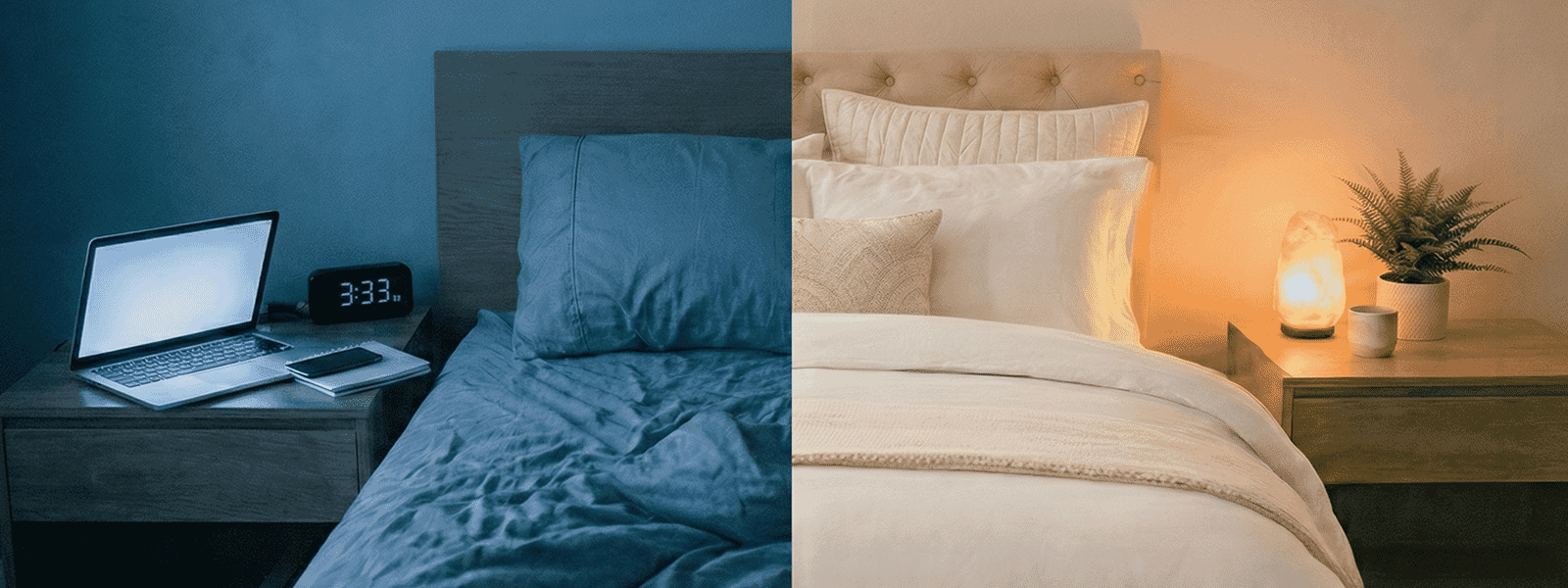
Why Your Circadian Rhythm Matters and How Bedroom Lighting Helps
It’s late. The room is quiet. You’re doing everything “right” like brushing your teeth, getting into bed, trying to relax. But the lights are still bright, your phone is glowing, and your brain is acting like it’s noon.
That tug-of-war is often your circadian rhythm getting mixed signals. Your body’s internal clock relies heavily on light to know when to feel alert and when to power down for sleep. So if your bedroom lighting is too bright, too cool, or timed wrong, it can make winding down harder than it needs to be. In this blog, we’ll break down what circadian rhythm is, what can throw it off, and how to use bedroom lighting to support better sleep. Think simple changes, real impact, no complicated science.
Table of Contents
What Is Circadian Rhythm?

Have you noticed you start feeling sleepy around the same time most nights, or how staying up too late or traveling across time zones can leave you feeling completely off?
That’s your circadian rhythm, your body’s natural 24-hour clock, at work. In fact, the word “circadian” comes from Latin, meaning “around a day” (“circa” for around and “diem” for day). It runs quietly in the background, helping your body stay awake and alert during the day, then sleep in one more solid, uninterrupted stretch at night.
Your body clock has a headquarters: a tiny group of cells in your brain called the suprachiasmatic nucleus (SCN), located in the hypothalamus. Its job is to keep your body’s daily timing on track. Throughout the day, the SCN communicates with the rest of your body, helping different systems know when to be active and when to slow down. The SCN is especially sensitive to light, so it uses light as a kind of “reset button.”
Bright light tells your body “wake up,” while softer, warmer light signals “wind down.”
Why Does Your Circadian Rhythm Matter for Daily Life?
Your circadian rhythm isn’t just a “sleep thing.” It’s more like a built-in schedule that helps your body decide when to do important work and how well to do it. If your rhythm is aligned, a lot of things start running more smoothly. If it’s off, you can feel it in ways that go far beyond bedtime.
When it is working with you, sleep tends to come easier and feel more restorative. You’re more likely to wake up feeling refreshed instead of groggy, and your energy can last longer through the day. Many people also notice better concentration and productivity because their brain is operating on a steadier rhythm, not constantly playing catch-up.
This internal timing system helps coordinate key body processes, including hormones, immune function, and body temperature. It also supports brain functions that affect your everyday life, like focus, memory, and mood. It even affects how your body handles food. The rhythm helps regulate metabolism and digestion, so when it’s out of sync, it can make it harder to manage weight and may increase the risk of issues like insulin resistance over time. Disruptions can also affect mental well-being, showing up as irritability, anxious feelings, low motivation, or emotional ups and downs.
In short: a healthier circadian rhythm can mean better sleep, a clearer mind, steadier energy, and a body that feels more balanced day to day.
What Can Affect Your Circadian Rhythm?
Your circadian rhythm isn’t fragile, but it is sensitive. Small daily habits can either help keep it on track or slowly push it out of sync without you realizing it.
Light is the biggest influence. Bright overhead lights at night, scrolling on your phone before bed, or working late under cool white lighting can all send your body the wrong signal, making it think it’s still daytime when it’s time to wind down.
Food timing plays a role too. Eating heavy meals late at night or constantly changing when you eat can confuse your internal clock, especially your digestive system.
Stress is another major factor. When you’re stressed, your body stays in alert mode longer, which can delay sleep and make it harder to fully relax at night.
Temperature matters more than most people realize. A room that’s too warm can interfere with your body’s natural nighttime cool-down, which is part of the sleep process.

Off-hour or night work shifts can throw your rhythm off completely. When your sleep and wake times change often, your body struggles to know when it’s supposed to be “on” or “off.”
Mental health also plays a role. Anxiety, low mood, or ongoing mental strain can affect sleep timing and quality, creating a cycle that’s hard to break.
Travel can also throw things off. Crossing time zones can cause jet lag because your body clock is still running on “home time,” even when you’re somewhere new.
Certain medications may have an impact too. Some can make you feel more alert or more drowsy, and the timing of when you take them can shift your sleep schedule.
Good news: out of all of these, light is one of the easiest to adjust, and your bedroom is a great place to start.
How Does Light Affect Your Circadian Rhythm?
Light is the strongest signal your body uses to set its internal clock. Your brain reads light as a cue for whether it’s time to be alert or time to slow down.
When your eyes are exposed to bright light, especially in the morning and early afternoon, your circadian rhythm gets the message that it’s daytime. This helps boost alertness, supports energy levels, and keeps your sleep schedule on track. As the day goes on and light naturally fades, your body expects things to get dimmer and warmer. This shift tells your brain to start producing melatonin, the hormone that helps you feel sleepy.
The problem is modern lighting doesn’t follow the sun. Bright overhead lights, cool white bulbs, and glowing screens (especially blue light) at night can block melatonin and push your circadian rhythm later, even if you feel physically tired. That’s why the timing, brightness, and color of the light you use matter. When your light matches the time of day, your body stays in sync. When it doesn’t, your circadian rhythm gets mixed signals and sleep can feel harder than it should.
Which Lighting Can Help Improve Your Circadian Rhythm?
If your circadian rhythm had a love language, it would be lighting that matches the time of day. In other words: brighter light when you want to feel awake, and softer, warmer light when you want your body to start powering down.
At night, warm light colors are your best friend. Shades like red, orange, and soft yellow act more like sunset, sending your brain the message that it’s time to relax. These tones tend to have a smaller impact on melatonin, the hormone that helps you feel sleepy, which is exactly what you want in the hours before bed.
Red light is one of the gentlest options at night. When it’s kept dim, it doesn’t throw off your body clock the way cooler light can. That’s why dim red night lights are often a smart pick if you need a little visibility without fully waking your brain up.

Yellow and orange light are also great evening choices. They create a calm, cozy mood and are much less stimulating than bright white or cool-toned lighting. A warm bedside lamp (ideally dimmable) is an easy upgrade that can make your bedroom feel more sleep-friendly.
On the flip side, cool and bright lighting can work against you at night. Blue light, which shows up in phone screens, TVs, and many LEDs, is especially disruptive because your eyes are very sensitive to it. Evening exposure can convince your brain it’s still daytime, delaying sleep and lowering sleep quality. Green light can have a similar effect, just not as strongly.
During the day, brighter and cooler light can be helpful. But at night, switching your bedroom to low, warm lighting helps keep your circadian rhythm on track and makes winding down feel more natural.
What Else Can You Do to Fix Your Rhythm?
Supporting your circadian rhythm isn’t about being perfect. It’s about giving your body clear, consistent signals over a full 24-hour day. Here are simple habits that make the biggest difference:
– Keep a consistent sleep schedule: Try to go to bed and wake up around the same time every day, even on weekends. This helps your body know what to expect.
– Build a wind-down routine: Create a calm bedtime routine that tells your body it’s time to slow down. If you want more ideas, our Luxury Sleep Edit for 2026 shares simple sleep rituals you can mix into your evenings.
– Watch evening caffeine and nicotine: Both can keep your body more alert than you realize, even hours later.
– Keep your bedroom sleep-friendly: Aim for a cooler room temperature, comfortable bedding, and calm, low bedroom lighting. Think breathable, softer sheet sets, plus a plush quilt or duvet that makes it easier to settle in and stay comfortable through the night.
– Go easy on alcohol at night: It may make you sleepy at first, but it can disrupt sleep quality later in the night.
– Limit screens before bed: Phone and TV blue light can make falling asleep harder. Swap in reading, light stretching, or a few minutes of meditation.
– Avoid late naps: Late afternoon or evening naps can steal sleep from later at night.
– Get morning daylight: Step outside or sit near a bright window soon after waking. Natural light is one of the strongest “wake up” signals for your body clock.
– Move your body daily: A walk, stretching, or light exercise helps reinforce your day-and-night rhythm (no intense workout required).
Conclusion
Now that you know what can throw your rhythm off and what supports it, the next step is simple: pick one change you can actually stick to this week. Small, consistent shifts add up fast. Creating a space that makes those habits easier is a big part.
At Orchids Lux Home, we believe comfort starts with creating spaces that feel good to live in, day and night. If you’re ready to make your bedroom feel even more restful, explore our luxury bedding made for everyday comfort, because when your space feels calm and cozy, it’s easier to stay consistent with a rhythm that works for you.
FAQs
Is it bad to have any light on at night while sleeping?
No. Dim warm, indirect bedroom lighting is usually fine. Bright or overhead lights are more likely to disrupt sleep than a small, dim night light.
What is the circadian rhythm in simple terms?
It’s your body’s internal 24-hour clock. It helps decide when you feel awake, sleepy, hungry, or alert, based largely on light and darkness.
How do I fix my circadian rhythm?
Focus on consistency. Wake up and go to bed at similar times, get daylight during the day, and use warm, dim bedroom lighting at night to help your body wind down.
What lighting supports the circadian rhythm?
Bedroom lighting that’s warm, dim, and indirect in the evening supports your circadian rhythm. Bright, cool lighting is best saved for daytime.
Can bedroom lighting really affect sleep quality?
Yes. Bedroom lighting sends strong signals to your brain. Using the right lighting at night can help melatonin rise naturally, making it easier to fall asleep and stay asleep.