The Anatomy of a Premium Quilt: A Modern Essential for a Perfectly Layered Bed
If you’re here, chances are you’ve hit the bedding crossroads: Quilt, Blanket, Duvet, comforter. Maybe you’re standing in the bedding aisle. Maybe you’re five tabs deep online. Either way, they all promise comfort, but they don’t all deliver the same feel, the same finish, or the same kind of effortless layering.
Comfort matters, but so does that clean, perfectly layered look and it’s not always obvious which piece gets you there. That’s why we’re zooming in on one modern essential: the Quilt. In this deep dive, we’re unpacking what a premium Quilt is really made of, the details that matter more than the label, and how to tell if it’s the right foundation for the perfectly layered bed you’re after.
Table of Contents
What is a Quilt?
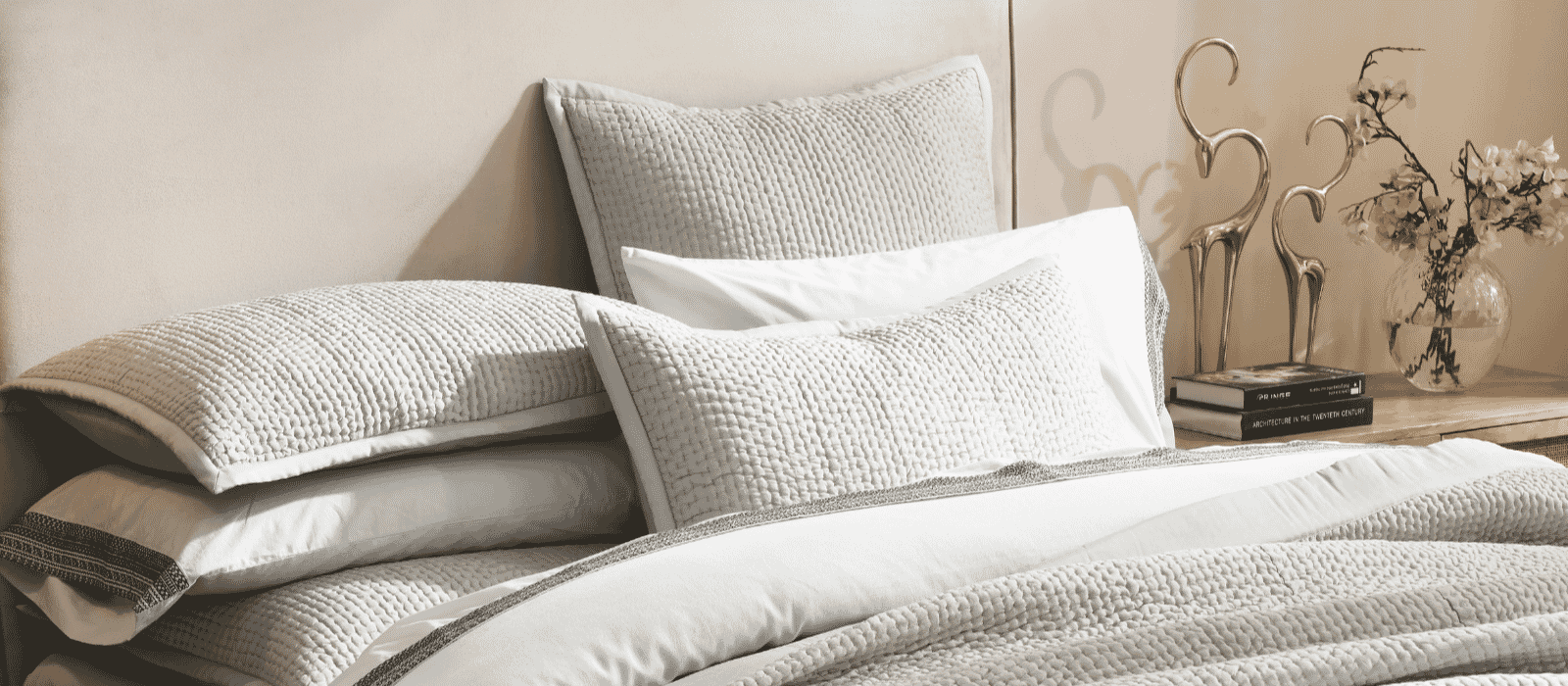
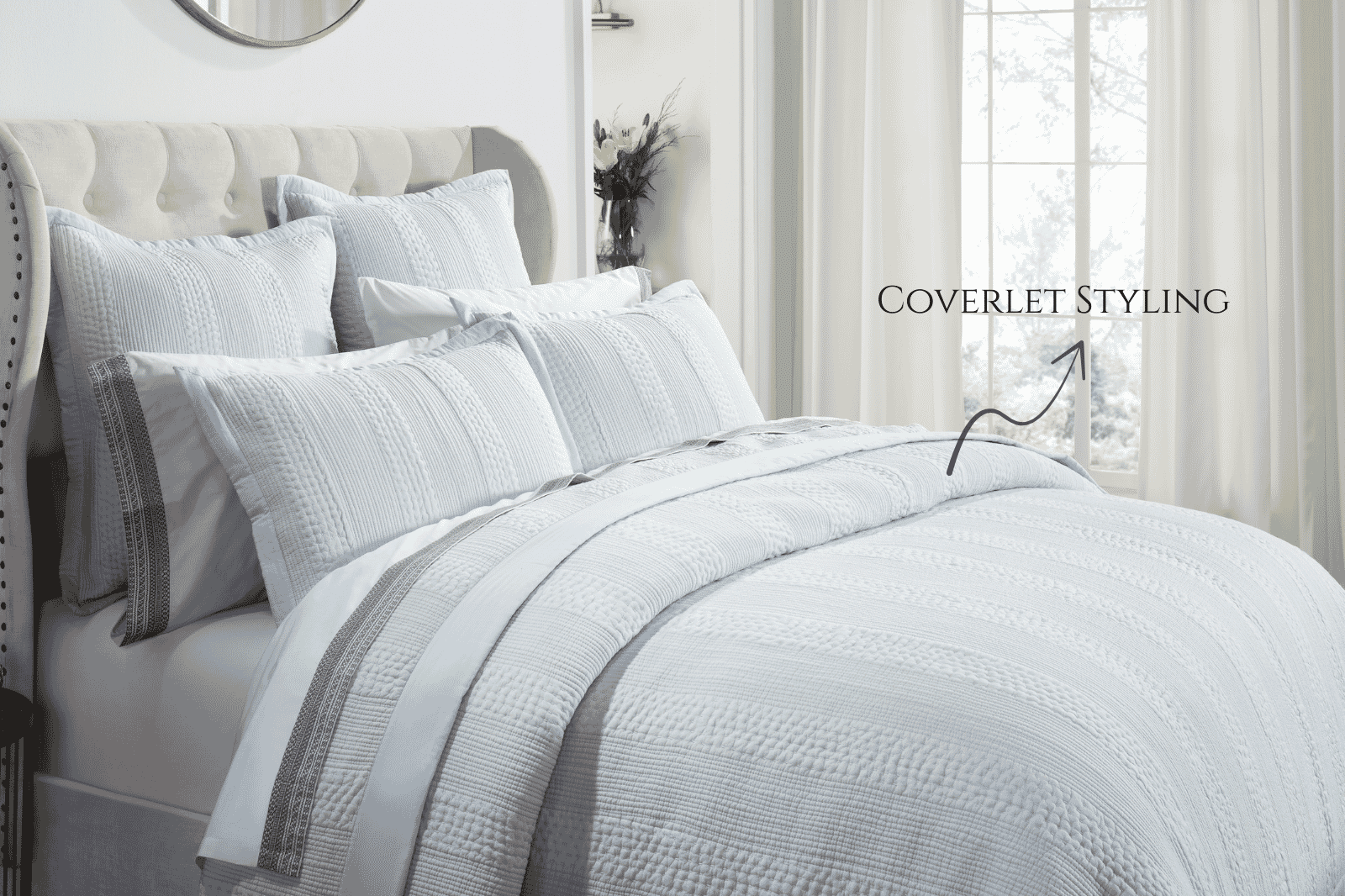
A Quilt is a layered bedding piece made by joining three separate layers into one finished textile. These layers are secured together through stitching (often in patterns), which is what gives a Quilt its structure, durability, and signature look. Quilts are both functional and decorative. They add comfortable warmth without feeling overly bulky, and they’re especially useful for layering through changing seasons. Because Quilts are designed to sit more streamlined and structured (rather than tall and lofty like Duvets or Comforters), they’re ideal if you love a cleaner, more layered bed look.
In simple terms, a quilt is made up of:
Top layer: This is the outer, visible layer, the one you notice first. It can be designed, textured, or minimal, and it’s what sets the overall style of the bed.
Batting (filling): The middle layer is the insulating core, also called batting. It’s what gives the quilt softness and warmth. Batting can be made from materials like cotton, wool, down, or synthetic fibres. Orchids Lux Home offers quilts with 100% cotton or 100% polyester batting for ultimate comfort.
Bottom layer: This is the underside of the Quilt, typically a smooth fabric layer that supports the Quilt’s structure and finishes the piece neatly.

In simple terms, a quilt is made up of:
Top layer: This is the outer, visible layer, the one you notice first. It can be designed, textured, or minimal, and it’s what sets the overall style of the bed.
Batting (filling): The middle layer is the insulating core, also called batting. It’s what gives the quilt softness and warmth. Batting can be made from materials like cotton, wool, down, or synthetic fibres. Orchids Lux Home offers quilts with 100% cotton or 100% polyester batting for ultimate comfort.
Bottom layer: This is the underside of the Quilt, typically a smooth fabric layer that supports the Quilt’s structure and finishes the piece neatly.
What is it Made of?
Let’s be honest, most of us don’t start by thinking about “fabric composition.” We start with the real questions: Will it feel good the second I pull it on? Will it look polished even when I didn’t make the bed perfectly? Will it work with the rest of my layers? And almost every time, the answer comes back to one thing: the fabric. It’s what decides whether a quilt feels crisp or cozy, airy or indulgent, and whether it drapes in that clean, intentional way instead of sitting stiffly on the bed.

Quilts come in a range of fabric finishes, each with its own vibe.
Cotton and Linen are the breathable, everyday staples, light, fresh, and easy to layer.
Silk feels smoother and more refined, with a naturally luxe touch that stays cool against the skin.
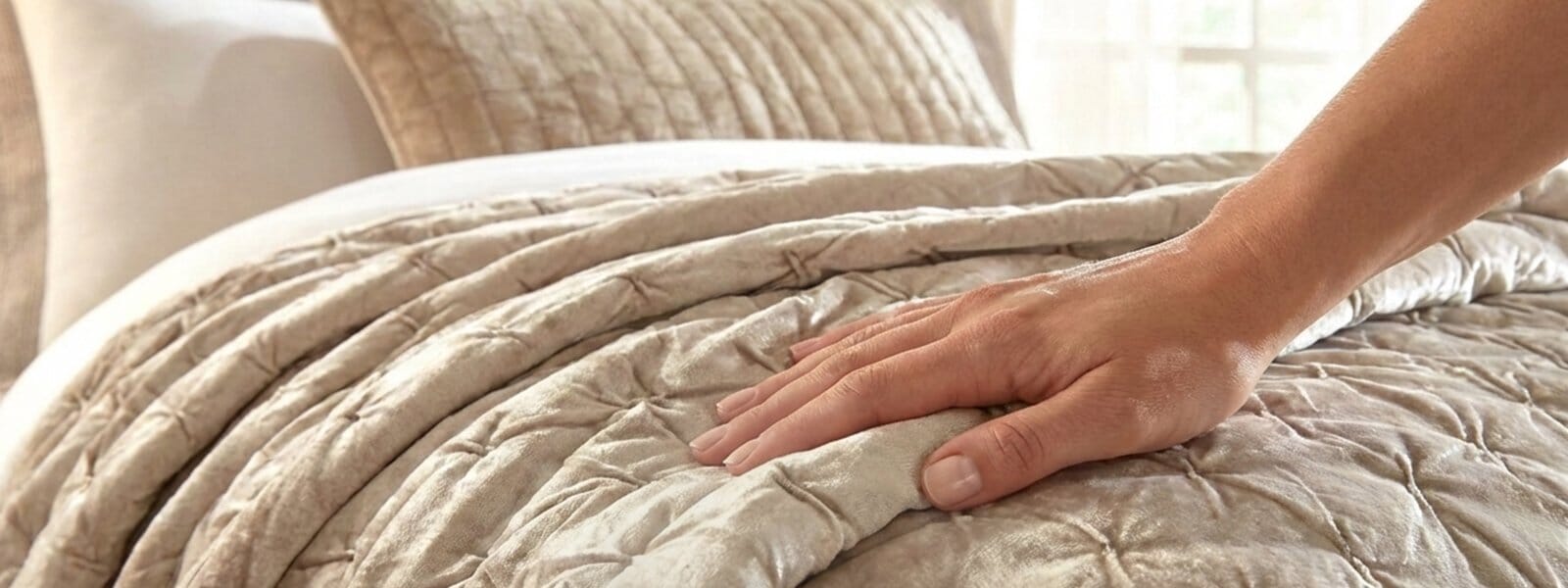
Velvet brings plush texture and visual depth, instantly making the bed feel richer and more elevated. And if you like a modern, fluid drape with a cooler feel, 100% Tencel is a standout. Once you know what you’re drawn to, it gets easier to choose a quilt that fits your routine and your style, and that’s exactly the kind of thoughtful fabric mix you’ll find across our collection.
Quilts come in a range of fabric finishes, each with its own vibe.
Cotton and Linen are the breathable, everyday staples, light, fresh, and easy to layer.
Silk feels smoother and more refined, with a naturally luxe touch that stays cool against the skin.
Velvet brings plush texture and visual depth, instantly making the bed feel richer and more elevated. And if you like a modern, fluid drape with a cooler feel, 100% Tencel is a standout. Once you know what you’re drawn to, it gets easier to choose a quilt that fits your routine and your style, and that’s exactly the kind of thoughtful fabric mix you’ll find across our collection.
How Do You Choose the Right Quilt Weight?
Weight is where a quilt gets practical, fast. It’s the difference between a layer that feels breezy and barely-there, versus one that gives you that cozy, tucked-in comfort the second the temperature dips. And the best part? Choosing the right weight can make your bed feel perfectly styled and comfortable without constantly swapping everything out.
In general, quilts fall into three sweet spots. Lightweight quilts are ideal for warm climates, summer nights, or anyone who runs hot, they add that finished, layered look without extra heat. Midweight quilts are the all-season favorite: substantial enough to feel comforting, light enough to stay versatile, and easy to layer up or down depending on the month. Heavyweight quilts are made for colder months (or chilly bedrooms) when you want more warmth and a more cocooned feel, either on their own or as the top layer over additional bedding.
What Stitching Patterns Do Quilts Use?
Stitching is the quiet detail that makes a quilt feel “premium” before you even touch it. It’s not just decoration, it’s what holds the layers together, controls how the quilt drapes, and helps it keep its shape over time. The stitch pattern can make a quilt look crisp and tailored, soft and relaxed, or modern and architectural, and it’s a big part of why some quilts look effortlessly polished on the bed.
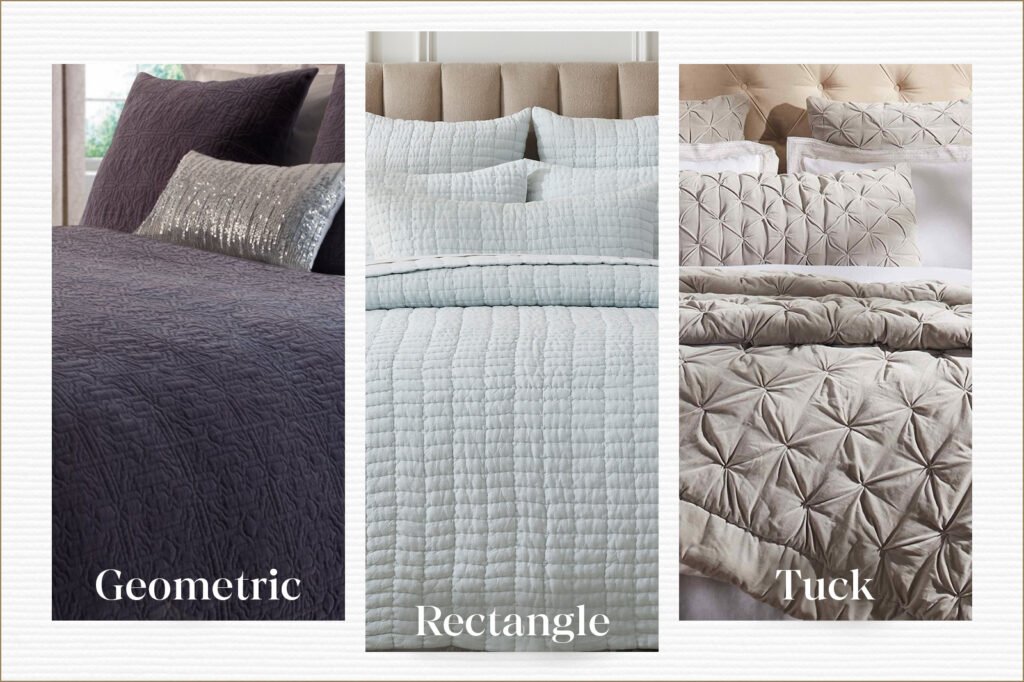
Quilting patterns come in a range of styles, each with its own personality. Channel stitching feels clean and contemporary, creating long lines that look especially sleek on a layered bed. Diamond adds a classic, dimensional texture that reads refined from any angle. Square and rectangle patterns bring a structured, grid-like look that feels modern and easy to style. Tuck quilting adds subtle depth and softness, perfect if you like texture that’s understated but elevated. And for a more design-forward finish, geometric patterns create visual interest that feels intentional without needing extra layers or fuss.

Who is a Quilt Right For?
A Quilt is for anyone who wants their bed to feel comfortable without feeling complicated. If you like breathable warmth instead of heavy heat, a quilt gives you that cozy layer that still feels light and fresh. It’s also a favorite if you prefer bedding that’s easy to live with, something you can smooth out in seconds and still get that clean, pulled-together look.
Quilts are also perfect for layering lovers. They play well with sheets, blankets, and duvets, so you can adjust your bed through the seasons without doing a full bedding overhaul. And if bulky comforters feel too puffy, too warm, or just visually too much, a quilt offers a more streamlined, neat finish, the kind of modern, tailored bed look that feels effortless every day.
What is the Difference Between a Quilt, Comforter, Duvet, and Blanket?

If bedding terms feel like a foreign language, you’re not alone. Most of the confusion comes from the fact that all four can go on top of your bed, but they’re built differently and they behave differently once you actually sleep under them.
A Quilt is made from three layers stitched together (top fabric, a middle filling, and a bottom fabric). Because it’s quilted into place, it tends to feel more structured and streamlined on the bed, not super puffy. Quilts are usually lighter than comforters, which makes them great for layering and for anyone who wants a neat, “finished” bed look.
A Comforter is the fluffy, thicker one-piece top layer. It’s typically filled with down or synthetic fill and is designed to be warm and cozy on its own. Comforters give you that lofty, cloud-like look, but they can feel bulky if you run warm or prefer a cleaner, flatter silhouette.
A Duvet is a two-part system: a duvet insert (the fluffy inner layer, similar to a comforter) plus a removable duvet cover that goes over it like a pillowcase. People love duvets because you can change the look easily by swapping covers, and it’s often simpler to wash the cover than washing a full comforter. The insert provides warmth; the cover handles the style.
A Blanket is usually a single layer (knit or woven) without built-in filling. It’s the most flexible piece: light warmth on its own, an extra layer when it’s cold, or a casual throw at the end of the bed. Blankets don’t usually give the same structured, polished finish as quilts, but they’re perfect for everyday layering and comfort.
In short: Quilt = stitched, layered, streamlined. Comforter = thick, fluffy, all-in-one. Duvet = insert + washable, swappable cover. Blanket = single-layer, versatile add-on.
If bedding terms feel like a foreign language, you’re not alone. Most of the confusion comes from the fact that all four can go on top of your bed, but they’re built differently and they behave differently once you actually sleep under them.
A Quilt is made from three layers stitched together (top fabric, a middle filling, and a bottom fabric). Because it’s quilted into place, it tends to feel more structured and streamlined on the bed, not super puffy. Quilts are usually lighter than comforters, which makes them great for layering and for anyone who wants a neat, “finished” bed look.
A Comforter is the fluffy, thicker one-piece top layer. It’s typically filled with down or synthetic fill and is designed to be warm and cozy on its own. Comforters give you that lofty, cloud-like look, but they can feel bulky if you run warm or prefer a cleaner, flatter silhouette.
A Duvet is a two-part system: a duvet insert (the fluffy inner layer, similar to a comforter) plus a removable duvet cover that goes over it like a pillowcase. People love duvets because you can change the look easily by swapping covers, and it’s often simpler to wash the cover than washing a full comforter. The insert provides warmth; the cover handles the style.
A Blanket is usually a single layer (knit or woven) without built-in filling. It’s the most flexible piece: light warmth on its own, an extra layer when it’s cold, or a casual throw at the end of the bed. Blankets don’t usually give the same structured, polished finish as quilts, but they’re perfect for everyday layering and comfort.
In short: Quilt = stitched, layered, streamlined. Comforter = thick, fluffy, all-in-one. Duvet = insert + washable, swappable cover. Blanket = single-layer, versatile add-on.
Conclusion
By now, “Quilt” shouldn’t feel like a vague category, it should feel like a confident choice. You know what gives it structure (those stitched layers), what changes the feel (fabric and batting), and why details quietly determine whether your bed looks casually neat or intentionally styled.
And if you’ve realized a Quilt is the modern essential that fits your sleep style and your space, you’ll find premium options across fabrics, finishes, and weights at Orchids Lux Home, all designed to layer beautifully and live even better. Whether you’re drawn to breathable cotton and relaxed linen, the sleek touch of silk, the plush depth of velvet, or the cool, fluid drape of 100% Tencel, we’ve curated quilts that feel as good as they look. From lighter picks for warm nights to cozier options for cooler months, every detail is chosen to make that perfectly layered bed feel effortless. To shop Quilts that match your layering preference, explore all the options today!
FAQs
What is a Quilt?
A Quilt is a layered bed covering made by stitching together three parts: a top layer, a batting (filling) layer, and a bottom layer. That stitching is what gives Quilts their signature texture and structure.
What are the benefits of Quilts?
A Quilt adds comfortable warmth without feeling bulky, making them great for everyday use and layering. They also give your bed a more finished, decorative look while staying soft and cozy.
What kind of Quilt is best for summer?
The best pick is a lightweight cotton Quilt for summer because cotton is breathable and helps with moisture. If you want extra softness, look for organic cotton or stonewashed cotton.
Is a Duvet or Quilt better for summer?
A Quilt is usually better for summer since it’s lighter and cooler than a duvet. Duvets are designed to trap more warmth, while quilts work well for warm nights or light AC layering.
Are Blanket and Quilt the same?
No. A Blanket is typically a single layer (knit or woven) for simple warmth. A Quilt has three stitched layers, so it offers more texture, structure, and a more styled look on the bed.