Why Linen Is The Bedding Upgrade That Actually Lasts?
Bedding gets a lot of attention on day one. The unboxing. The fresh-bed feeling. The “this is going to change everything” energy. Then real life shows up with its usual cast: laundry cycles, changing seasons, cozy nights, sweaty nights, snack crumbs, sunscreen, pets, naps that turn into full sleeps. And suddenly, the question isn’t “Does this look nice?” It’s “Does this still feel good after living in it?” That’s where linen bedding earns its reputation. Not as a quick refresh, but as a long-game upgrade that holds up to everyday use while staying effortlessly at home in your space. If you’re considering linen, this is the overview to read before you choose your first pieces.
Table of Contents
What is Linen?

Linen is a natural fabric made from the fibers of the flax plant, a three-foot-tall plant with glossy leaves and pale blue flowers (AKA Linum usitatissimum) that grows in cool climates across the world, from India to Western Europe. Flax plants typically grow for about one hundred days before harvesting, after which the fibers are processed, spun, and woven into linen.
It has been used for centuries, not because it’s trendy, but because it’s practical: strong, breathable, and built for repeat wear. In bedding, linen is often woven with a slightly thicker, more textured feel than many other common fabrics. That texture is part of its charm. It brings depth to a bed, the way a good knit blanket does, or the way a well-worn favorite shirt looks better than something stiff and brand-new. One helpful way to think about linen: it isn’t trying to be glossy-perfect. It’s aiming for “real-life beautiful”, relaxed, welcoming, and meant to be enjoyed, not fussed over.
Linen is a natural fabric made from the fibers of the flax plant, a three-foot-tall plant with glossy leaves and pale blue flowers (AKA Linum usitatissimum) that grows in cool climates across the world, from India to Western Europe. Flax plants typically grow for about one hundred days before harvesting, after which the fibers are processed, spun, and woven into linen.
It has been used for centuries, not because it’s trendy, but because it’s practical: strong, breathable, and built for repeat wear. In bedding, linen is often woven with a slightly thicker, more textured feel than many other common fabrics. That texture is part of its charm. It brings depth to a bed, the way a good knit blanket does, or the way a well-worn favorite shirt looks better than something stiff and brand-new. One helpful way to think about linen: it isn’t trying to be glossy-perfect. It’s aiming for “real-life beautiful”, relaxed, welcoming, and meant to be enjoyed, not fussed over.
What Does Linen Bedding Feel Like?
The feel of bedding made with linen can surprise people, especially if the expectation is silky-smooth right out of the package.
The first feel
At first touch, linen often feels crisp, airy, and lightly textured. Not scratchy, but not “butter-soft” either. It’s more like a clean, fresh breeze than a polished hotel sheet.
After it’s lived in
Linen is known for changing with time. With regular washing and use, it tends to relax and soften, becoming smoother while keeping that breathable, natural character. Many linen lovers describe it as bedding that “settles in,” like it adapts to the rhythm of the home.

The look and drape
Linen has an easy drape and a naturally relaxed finish. It doesn’t cling or look overly flat. Instead, it creates that layered, cozy texture that makes a bed feel styled even when the morning routine was more “toss pillow, run out the door.”
The feel of bedding made with linen can surprise people, especially if the expectation is silky-smooth right out of the package.
The first feel
At first touch, linen often feels crisp, airy, and lightly textured. Not scratchy, but not “butter-soft” either. It’s more like a clean, fresh breeze than a polished hotel sheet.
After it’s lived in
Linen is known for changing with time. With regular washing and use, it tends to relax and soften, becoming smoother while keeping that breathable, natural character. Many linen lovers describe it as bedding that “settles in,” like it adapts to the rhythm of the home.
The look and drape
Linen has an easy drape and a naturally relaxed finish. It doesn’t cling or look overly flat. Instead, it creates that layered, cozy texture that makes a bed feel styled even when the morning routine was more “toss pillow, run out the door.”
What Makes Linen Worth It?
Here’s where linen’s “lasting upgrade” reputation starts to make sense. Not because it does one thing well, but because it quietly checks a lot of boxes for everyday bedding.
Breathability
Linen has an airy structure that helps it feel light and comfortable across different temperatures. Some nights are cool, some nights are warm, and most people do not want to rethink their entire bedding setup every time the weather shifts.Part of this comfort comes from the way the fibres are built. The fibres in linen are naturally long and slightly hollow, which gives the fabric an open internal structure that allows air to move through with ease. The fabric is also woven with a more relaxed construction and a subtly porous surface. Together, these qualities encourage steady airflow around the body and help prevent that heavy, trapped feeling that can build up overnight. As a result, the bed tends to feel fresher and more comfortable across changing seasons and for different types of sleepers.
Softens over time
Some fabrics peak early, super soft at first and then they gradually flatten, pill or lose their appeal. Linen may feel slightly crisp at the beginning, yet it is often chosen because it tends to soften with use instead of fading into disappointment. The natural pectin that once helped bind the fibres gradually breaks down over time, which lets the fabric relax a little more with every wash. Rather than wearing out, it settles in. With each wash, it becomes softer and more comfortable against the skin, making it one of those rare materials that truly improves the longer it is lived in.
Durability
Bedding doesn’t get worn once a week like a special outfit. It gets used constantly. Durability is also where linen quietly outperforms many conventional bedding fabrics. It is prized for being a strong natural fiber, which is part of why it holds up so well when bedding gets washed, rotated, and slept in on repeat. High-quality linen is less prone to pilling, so it keeps a cleaner, smoother appearance over the long term, even with consistent rotation and laundering. That longer lifespan matters: when bedding lasts, it reduces the need for frequent replacements, which is both more sustainable and often more cost-effective over time. In other words, linen doesn’t just offer comfort for a season. With proper care and a well-made weave, it’s the kind of bedding that can stay in your home for years, getting softer, more familiar, and more enjoyable along the way.
Temperature regulating
Linen naturally supports temperature regulation which is why it works in both warm and cool bedrooms. Studies on flax linen fabrics show that they keep some warmth while still allowing heat to move through rather than acting like a thick barrier, which helps the body stay in a comfortable temperature range. When the room is warm this breathable structure lets excess heat escape and allows perspiration to evaporate more easily so the bed feels cooler and drier through the night. In cooler conditions the same structure works with your other layers to hold a gentle pocket of warmth instead of creating a heavy damp feeling. Because linen manages both airflow and moisture it helps the bed stay closer to a natural comfort zone across changing seasons which is especially helpful for hot sleepers and for homes where room temperatures change.
Hypoallergenic & Antibacterial
Beds and bedrooms often become a quiet home for allergens, and your mattress alone can host anywhere from 100,000 to 10 million microscopic dust mites according to some estimates. In that context, linen is often recommended for anyone who wants a cleaner, gentler sleep environment. The fibres help reduce excess moisture around the skin. A drier, better ventilated surface is less welcoming to odour causing bacteria and everyday microbes, supporting a fresher bed for longer between washes. It is also widely considered a naturally hypoallergenic option. Pure linen tends not to trap as many particles as some dense synthetic fabrics, and its airflow helps minimize the warm, humid conditions that can aggravate sensitive or reactive skin. Many people with allergies or easily irritated skin find they can sleep more comfortably on this type of fabric. Combined with its gentle feel that softens over time, these properties make linen a strong choice for those looking for bedding that supports both comfort and a calmer, lower irritation sleep environment.
Aesthetic Appeal
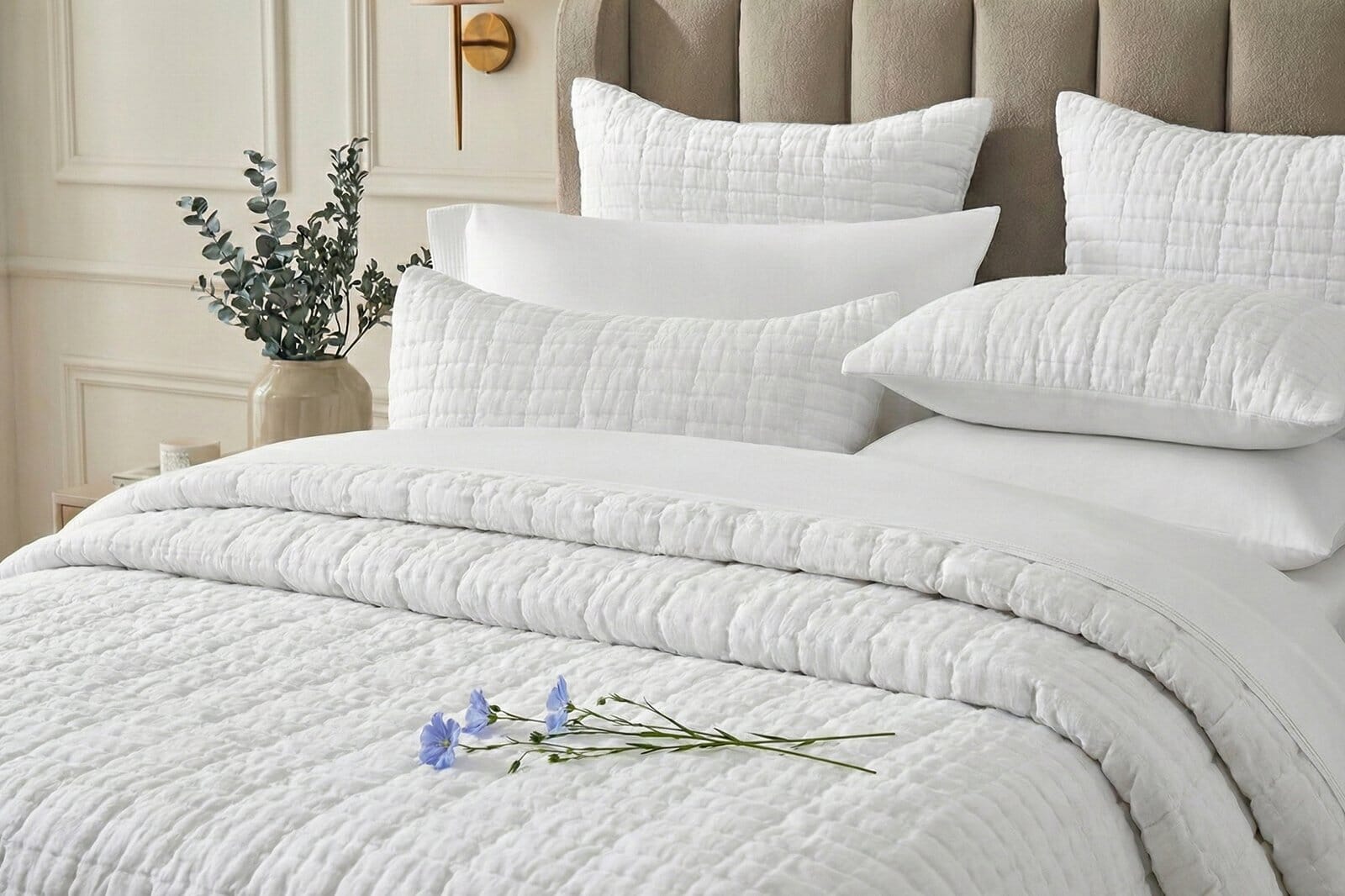
This is another quiet advantage that sits alongside all the practical benefits. Linen instantly brings a relaxed, lived in look to the bed, the kind of texture that feels inviting rather than stiff or overly perfect. The gentle creases and natural drape add character so the bed looks thoughtfully styled even on busy mornings. It also works beautifully with a wide range of colours and interior styles, from calm neutrals to richer tones, which makes it easy to update the room without changing every piece of bedding. The overall effect is a bedroom that feels softer, warmer and more welcoming, so comfort truly comes not only from how the bed feels but also from how it looks in everyday life.
What Linen Bedding Pieces Do You Need?

If you’re feeling the nudge to upgrade, you don’t have to redo your whole bed in one go.
Start with the foundation: a Linen Sheet Set (fitted sheet, flat sheet, and pillowcases). This is the layer you interact with every night, so it sets the tone for comfort. One quick tip: check your mattress depth before buying a fitted sheet. Linen has a beautiful drape, but a great fit matters, especially if you use a topper.
Next, add a Duvet Cover to anchor the look and make seasonal swaps easy, just change the insert weight instead of rethinking the whole bed.
If building a set all at once feels like a lot, go in phases: sheets first, then the duvet cover. That’s usually the fastest path to a bed that feels “finished” without overbuying.
After that, it’s all about layering based on how you sleep. A Quilt is the year-round workhorse: light enough to use alone in warmer months, and perfect over a top sheet in shoulder seasons. A Coverlet is more about polish, it adds structure and a tidy, styled layer without bulk. For extra warmth (or for that “nap magnet” effect), bring in a Blanket as the flexible top layer, easy to pull up, fold down, or toss at the foot of the bed. With these pieces, the goal isn’t to own everything, it’s to build a setup that can shift with temperature and mood without starting from scratch.
If you’re feeling the nudge to upgrade, you don’t have to redo your whole bed in one go. Start with the foundation: a linen sheet set (fitted sheet, flat sheet, and pillowcases). This is the layer you interact with every night, so it sets the tone for comfort. One quick tip: check your mattress depth before buying a fitted sheet. Linen has a beautiful drape, but a great fit matters, especially if you use a topper.
Next, add a duvet cover to anchor the look and make seasonal swaps easy, just change the insert weight instead of rethinking the whole bed. If building a set all at once feels like a lot, go in phases: sheets first, then the duvet cover. That’s usually the fastest path to a bed that feels “finished” without overbuying.
After that, it’s all about layering based on how you sleep. A quilt is the year-round workhorse: light enough to use alone in warmer months, and perfect over a top sheet in shoulder seasons. A coverlet is more about polish, it adds structure and a tidy, styled layer without bulk. For extra warmth (or for that “nap magnet” effect), bring in a blanket as the flexible top layer, easy to pull up, fold down, or toss at the foot of the bed. With these pieces, the goal isn’t to own everything, it’s to build a setup that can shift with temperature and mood without starting from scratch.
Conclusion
Linen bedding is the kind of upgrade that doesn’t need constant hype because it proves itself quietly, night after night. If there’s one takeaway from this guide, it’s that linen is less about chasing a perfect bed and more about choosing a fabric that fits the way you actually live. If you want a bed that looks and feels right in real life, not just in photos, this is an upgrade that holds its place for the long run.
At Orchids Lux Home, our linen bedding comes in shades you’ll genuinely want to live with, from soft neutrals to richer tones that make the room feel intentional without trying too hard. And our range is STANDARD 100 by OEKO-TEX® Certified, meaning it’s tested for harmful substances, which matters when it’s the fabric you’re closest to every single night. If you’ve been waiting for a sign to upgrade, this is a gentle one: start small, choose the color that feels like you, and let the rest of the bed follow.
FAQs
Is Linen bedding scratchy?
Linen has a natural texture, so it can feel more structured at first compared to ultra-smooth fabrics. Over time and with washing, it typically becomes softer and more relaxed.
Does Linen bedding wrinkle?
Yes, Linen naturally wrinkles and that’s part of its signature look. It’s more “effortlessly lived-in” than crisp and pressed.
Is Linen bedding good for all seasons?
Many people use Linen year-round because it’s breathable and layers well. The overall warmth depends on what it’s paired with (duvet insert weight, quilts, throws).
How do you wash Linen bedding?
Most Linen bedding can be machine washed on a gentle cycle with mild detergent. Avoid harsh bleach and overly high heat. Always follow the care label for the specific product.
How long does Linen bedding last?
Longevity depends on quality and care, but Linen is widely chosen as a long-term bedding fabric because it’s a strong natural fiber and holds up well with regular use.